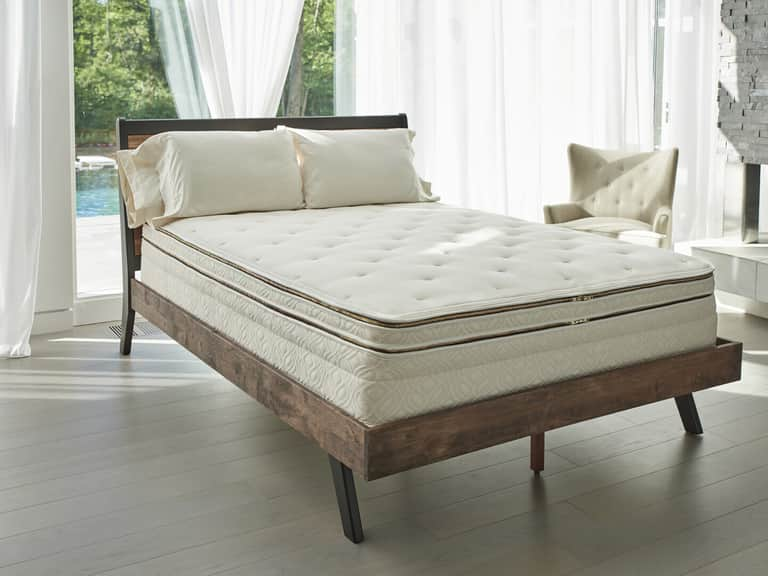
Organic mattresses & bedding labels
Reading Certifications for Organic Sleep Surfaces: What Those Labels Really Tell You
A mattress can be described as natural, organic, low-emission, or responsibly made—and those words don’t all mean the same thing. The helpful details are usually smaller: the certifier’s name, what the certificate covers, and whether it applies to the finished sleep surface or just one of its ingredients.
Shopping for an organic mattress or topper can feel like decoding a stack of labels while standing in a showroom. One product mentions organic cotton. Another highlights wool. A third promises low chemical emissions. Each claim may be useful, but none automatically confirms every other thing a shopper might want to know about materials, health, or environmental impact.
That distinction matters because a certification is not a universal gold star. Standards are designed for particular purposes. Some address the origin and handling of organic fibers. Others evaluate chemical emissions, restrict certain substances, or set requirements for a product category. A label can offer meaningful evidence within its defined scope, but it does not necessarily verify the mattress from cover to core.
The smartest approach is not to memorize every acronym. It is to read the claim behind the mark. Find out who issued it, what materials or manufacturing stages it covers, and whether the document applies to the complete mattress, a component, or a facility. With those questions in hand, bedding labels become easier to compare—and much harder to misread.
First, separate the words on the label
Product pages often use terms such as “organic,” “natural,” “non-toxic,” “eco-friendly,” and “chemical-free” close together. They may sound like variations on one promise, but they are not interchangeable. A precise claim should make clear what it describes. If a label simply says “organic mattress,” ask whether that refers to the complete product or to specific materials inside it.
- Organic: Usually refers to agricultural materials produced and processed according to a defined organic standard. The relevant rules depend on the material and certification program.
- Natural: A broad description, not a single universal certification. Ask which ingredient is natural and how that term is being defined.
- Low-emission: Typically concerns emissions released into indoor air under a specified testing program. It does not by itself prove that ingredients are organic.
- Non-toxic or chemical-free: Broad phrases that need explanation. All materials are made of chemicals in the scientific sense, so a useful claim should name the substances restricted or the test performed.
- Sustainable or eco-friendly: Wide-ranging environmental terms. Look for the particular impact being measured, the standard used, and the part of the supply chain included.
These distinctions are not a reason to dismiss labels. They are a reason to read them as evidence about a specific question rather than as a blanket guarantee. A product could have certified organic cotton in its cover and separately carry an emissions certification. Those claims concern different things, and one does not establish the other.
A certification mark has a job—and boundaries
Independent standards can help shoppers because they replace a vague marketing phrase with criteria that a certifier can assess. Depending on the program, an evaluation may involve documentation, supply-chain records, testing, inspections, or ongoing compliance requirements. The exact process differs, which is why the name of the standard matters.
But a certificate always has boundaries. It may cover a fiber, a processing facility, a particular product line, or a finished item. It may also have an expiration date or apply only to a specific model. A company’s general commitment to using certified materials is not the same as proof that every item it sells is certified.
Think of the mark as the beginning of a conversation, not the end. If a mattress description features a certification logo, look for a page or document that spells out the certificate holder, the covered products, the scope, and the standard’s current status. When those details are hard to locate, ask the manufacturer or retailer for them.
Organic-material claims: trace the ingredient
For organic sleep surfaces, shoppers often encounter claims about cotton, wool, and latex. Each material can appear in different parts of a product: cotton may form the outer cover, wool may be used as a comfort or temperature-regulating layer, and latex may be part of the cushioning core. A claim about one component does not automatically extend to the others.
Ask for a material breakdown that identifies the layers and their approximate composition. Then match each organic claim to the material it describes. If a mattress has an organic cotton cover but other components are not identified as organic, the wording should not be taken to mean the entire mattress is certified organic.
It is also useful to distinguish the raw material from the finished product. Certification may verify an agricultural input or the processing and handling of a textile. A separate product-level standard, if applicable, may have a different scope. Neither should be assumed to cover every substance or every stage of production unless the certificate says so.
For shoppers considering latex, ask whether the claim refers to the latex itself, the finished latex layer, or the complete sleep surface. “Natural latex” and “organic latex” are not identical claims. Request the exact standard and documentation behind the description, and check whether other layers—such as adhesives, fabric, or fire barriers—are included in the product information.
Emissions labels answer a different question
Some certifications and testing programs focus on indoor-air emissions. They assess whether a product releases specified compounds under the conditions and methods set by the program. That can be useful for someone who wants information about emissions from a new mattress, but it is not the same as verifying organic agriculture or a product’s full environmental footprint.
When you see an emissions claim, check what was tested. Was it a finished mattress, a foam component, a textile, or a group of products represented by a sample? Look for the testing standard, the test date if available, and the certificate or listing that identifies the product. A general statement that materials are “tested” is less informative than a named program with a clear scope.
Also keep the claim in perspective. An emissions certification does not mean that a product contains no chemicals, nor does it guarantee that every individual will have the same experience. It indicates that the evaluated product or component met the program’s specified requirements. That is meaningful information, but it is not a medical promise.
How to inspect a product page without getting lost
Certification language can be easy to miss among comfort descriptions, product specifications, and care instructions. A calm, step-by-step review is often more useful than trying to judge a mattress by the number of logos displayed on the page.
- Write down the exact claim. Is it about organic fiber, chemical emissions, a manufacturing process, or the entire product?
- Identify the certifier. A logo should be accompanied by a recognizable program name and a way to verify the claim.
- Find the scope. Check whether the certification applies to a finished mattress, a specific layer, a material, or a facility.
- Confirm the model. Make sure the certificate or product listing matches the exact mattress or topper you are considering, not merely the brand.
- Read the materials list. Look for covers, fillings, foams, latex, adhesives, fire barriers, and other components, where disclosed.
- Check the date and status. Certifications can change or expire, and product specifications may be updated.
- Ask for supporting documents. A certificate, public registry entry, or detailed explanation can clarify what a short marketing statement leaves out.
Keep copies or screenshots of the product details and documentation you rely on. That can help if you need to revisit the information later, especially when comparing several organic mattresses with different constructions and certification claims.
Questions worth asking a retailer or manufacturer
A trustworthy answer should be specific and easy to understand. You do not need to challenge a salesperson or become a standards expert; a few clear questions can reveal whether a claim has substance behind it.
- Which independent organization issued the certification?
- Does it cover this exact model, or only selected materials or a facility?
- Which components are certified, and which are not included in the scope?
- Can I review a current certificate or find the product in a public database?
- Is the claim about organic content, emissions, restricted substances, or something else?
- How are adhesives, fire-safety components, and other less visible parts described?
- Has the product construction changed since the certificate or test was issued?
If an answer is “the whole mattress is certified,” ask what “whole” means in the relevant program. If the answer is “the materials are safe,” ask which standard or test supports that statement. Clear explanations are more reassuring than a long list of impressive-sounding terms.
A practical example: reading a topper claim
Consider a wool mattress topper described as having natural wool inside an organic cotton cover. Those details tell you something about the stated materials, but they do not, on their own, establish that the finished topper has a particular certification. To assess it, find out whether the organic cotton claim is independently certified, whether the wool has its own certification, and whether any certification covers the completed topper.
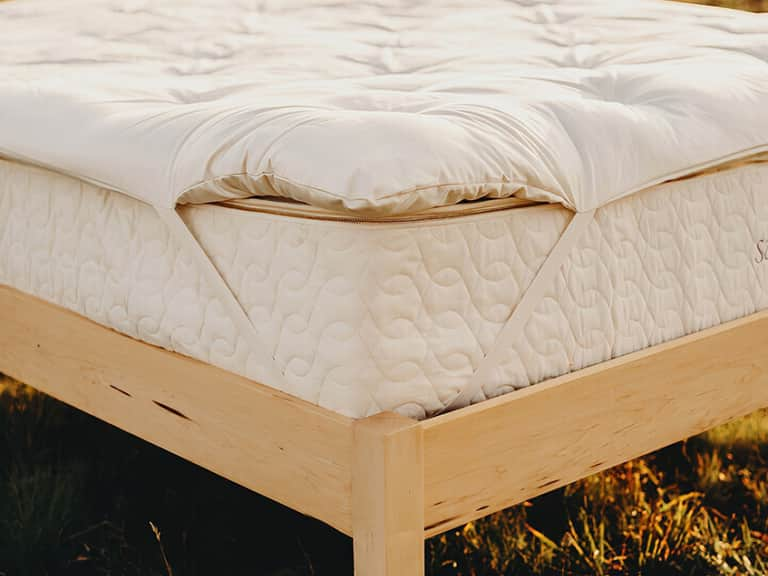
For example, the Savvy Rest Natural Savvy Woolsy Mattress Topper is described as using natural wool in a quilted certified organic cotton cover. That description can help a shopper understand the intended materials and construction. For a certification-focused comparison, the next step is to consult the manufacturer’s documentation and confirm exactly which materials and product, if any, are covered by each certification. The product description alone should not be treated as a substitute for that verification.
This is a useful habit with any sleep surface, from a topper to a full mattress. Read the materials description for comfort and construction, then read the certification documentation for verification. They are related sources of information, but they answer different questions.
Why certification does not predict comfort
A certification can help assess a defined claim. It cannot tell you whether a mattress will feel too firm, whether a pillow will keep your neck comfortable, or whether a topper will change the support you need. Those decisions depend on factors such as sleep position, body shape, personal preference, mattress condition, and the rest of the bed setup.
It is also worth separating health concerns from marketing language. A certification is not a diagnosis, a treatment recommendation, or a guarantee that a product will prevent symptoms. People with allergies, asthma, chemical sensitivities, or other medical concerns may wish to discuss specific materials or exposures with a qualified health professional. Ask manufacturers for ingredient and testing details rather than relying on broad claims about what is “safe for everyone.”
In other words, use labels to narrow down material and process questions, then evaluate comfort and support separately. A sleep surface can meet a standard and still be the wrong feel for a particular sleeper. Conversely, a comfortable product still deserves clear, accurate claims about its materials.
Red flags—and signs of a clearer claim
Not every vague phrase is proof of a problem, but it should prompt a follow-up. Be cautious if a product page displays a certification logo without naming the standard, calls a mattress “100% organic” without identifying the covered components, or uses “chemical-free” as a substitute for a precise explanation. A badge that cannot be matched to a certifier or product record offers little practical value.
By contrast, a strong explanation usually names the standard, describes its scope, identifies the materials covered, and provides a route to documentation. It distinguishes the certified portion from components outside that claim. It also avoids implying that one certification proves everything about health, sustainability, durability, and performance.
Be mindful of broad environmental promises, too. “Green,” “clean,” and “planet-friendly” can mean many things. Look for concrete information about what was measured or verified, such as material sourcing, processing, emissions, or packaging. No single label is likely to provide a complete account of a product’s impact across its entire life cycle.
Make a short comparison sheet
When comparing mattresses, a simple table can turn a pile of claims into a useful overview. Record the product name, the exact certification, the covered material or stage, and where you found supporting documents. Add comfort details—firmness, height, layer construction, and care requirements—in separate columns. Keeping certification and comfort side by side, but distinct, makes the comparison more balanced.
For example, one product might provide detailed documentation for its cotton cover but limited information about other layers. Another might disclose a broader product-level certification while offering a different feel or construction. The right choice depends on your priorities and budget. A longer list of labels does not automatically make one mattress a better fit; clarity, relevance, and verifiability matter more.
Remember that product pages can be updated. Before making a decision, confirm that the details apply to the current model and configuration. If a mattress offers multiple firmness options, covers, or sizes, check whether the certification applies to every version or only certain components or configurations.
The bottom line on organic sleep surfaces
Certification labels can make a complicated purchase easier, but only when you know what they are certifying. An organic-material claim, an emissions test, and a manufacturing standard are not interchangeable. The presence of one mark is not proof of every environmental, health, or quality claim made about a product.
Start with three questions: Who issued the certification? What exactly does it cover? Does it apply to the finished sleep surface or only a component? Then check the model, date, materials list, and supporting documentation. If a company can answer those questions plainly, you have a much stronger basis for comparing its claims with those of other brands.
Ultimately, an informed choice is not about collecting the most logos. It is about matching clear evidence to your own priorities—whether that means verifying organic fibers, learning about emissions testing, understanding the construction, or finding a comfortable surface that suits your needs. Read the label, follow the claim to its source, and let the details—not the headline—do the talking.
Quick checklist before you buy
- Identify the exact certification program rather than relying on a logo alone.
- Confirm whether the claim covers the complete mattress, a component, or a facility.
- Match organic-material claims to the specific fibers or layers named.
- Read emissions claims as emissions information—not as proof of organic content.
- Ask for current documentation and verify that it matches the model being considered.
- Evaluate comfort, support, and care needs separately from certification status.